
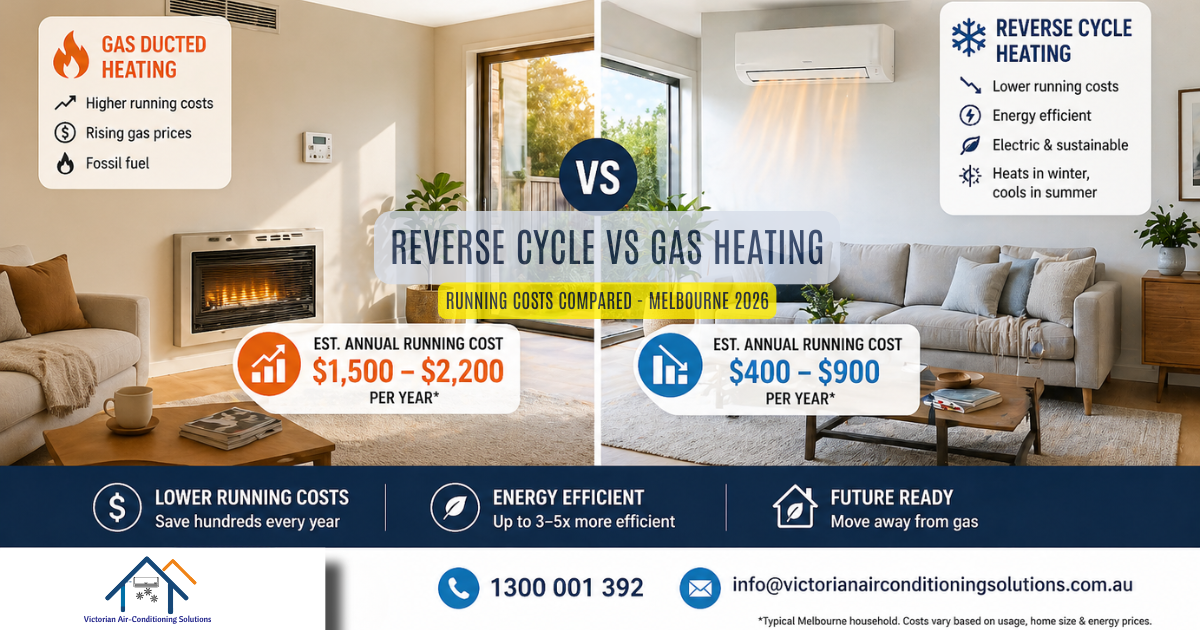
Running Costs Compared for Melbourne (2026)
With energy prices rising across Melbourne, choosing the right heating system in 2026 is no longer just about comfort — it’s about long-term running costs and efficiency.
Two of the most common options homeowners compare are:
- Gas ducted heating
- Reverse cycle (electric) heating
So which one is actually cheaper to run in Melbourne homes?
Let’s break it down with real data and facts.
🔍 How Each System Works
Gas Ducted Heating
Gas ducted systems burn natural gas to generate heat, which is then distributed through ducts across the home.
- Whole-home heating
- Fast warm-up time
- Relies on gas supply
Reverse Cycle Heating
Reverse cycle systems use heat pump technology to extract heat from the air and transfer it indoors.
- Uses electricity (not gas)
- Can both heat and cool
- Works with split systems or ducted systems
⚡ Running Cost Comparison (Melbourne 2026)
Annual Heating Cost (Typical Home)
- Gas ducted heating: ~$1,500 – $2,200 per year
- Reverse cycle heating: ~$400 – $900 per year
👉 That’s a potential saving of $800–$1,300 per year
Independent Government-Based Estimates
From Victorian energy data:
- Gas ducted (4-star): ~$1,754/year
- Reverse cycle ducted: ~$721/year
👉 Reverse cycle systems can cost less than half to run
⚙️ Energy Efficiency Difference
This is where the biggest cost difference comes from:
- Gas heating efficiency: ~80–95%
- Reverse cycle efficiency: 300–500%
👉 Reverse cycle systems produce 3–5 units of heat for every 1 unit of electricity used
That’s why they consume far less energy for the same comfort.
💰 Hourly Running Cost Comparison
- Reverse cycle: ~$1.00 – $1.50 per hour
- Gas ducted: ~$1.70 – $2.50 per hour
👉 Over a full Melbourne winter, this adds up significantly.
📉 Why Gas Is Becoming More Expensive
Several factors are pushing gas costs higher in Victoria:
- Rising gas prices across Australia
- Daily supply/connection charges
- Lower efficiency compared to modern electric systems
👉 Even efficient gas systems still burn fuel — reverse cycle systems don’t.
🌞 Additional Savings with Reverse Cycle
1. Works with Solar
Reverse cycle systems can run on solar power, reducing costs even further.
2. Heating + Cooling in One System
Gas systems only heat.
Reverse cycle systems:
- Heat in winter
- Cool in summer
👉 Eliminates need for separate air conditioning
3. Zoning & Smart Control
You can heat only the rooms you use — reducing energy waste.
🏡 Real-World Savings in Melbourne
Studies show switching from gas to reverse cycle can deliver:
- Hundreds to over $1,000/year savings
- Lower energy consumption
- Reduced household emissions
⚖️ When Gas Might Still Make Sense
Gas ducted heating may still suit:
- Homes with existing ductwork (lower upfront switch cost)
- Very large homes using whole-home heating constantly
- Properties without electrical upgrade capacity
👉 But even in these cases, long-term costs are usually higher.
🔮 2026 & Beyond: The Shift Away from Gas
Victoria is moving toward electrification:
- Gas heating is gradually being phased down
- Energy policies favour electric systems
- Rebates support switching to reverse cycle systems
👉 Choosing reverse cycle today helps future-proof your home.
🧠 Final Verdict: Which Is Cheaper?
✔ Reverse Cycle Heating Wins on Running Costs
- Lower annual energy bills
- Higher efficiency
- Dual heating & cooling
- Solar compatibility
❌ Gas Ducted Heating
- Higher ongoing costs
- No cooling capability
- Less efficient overall
🛠️ How Victorian Air Conditioning Solutions Can Help
At Victorian Air Conditioning Solutions, we help Melbourne homeowners:
- Replace gas systems with energy-efficient reverse cycle systems
- Maximise available rebates
- Get professional installation tailored to your home
📞 Get Expert Advice
Thinking of switching from gas to reverse cycle?
📞 1300 001 392
✉ info@victorianairconditioningsolutions.com.au
In Melbourne’s climate and energy market in 2026,
reverse cycle heating isn’t just an upgrade — it’s a smarter financial decision.
Lower bills. Better comfort. Future-ready living.

Leave a Reply